
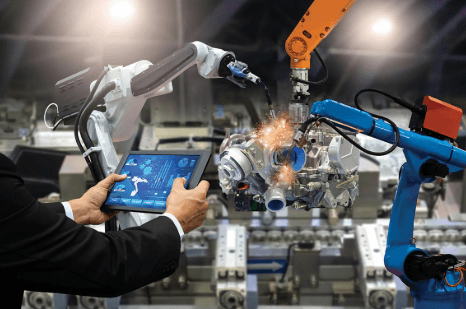
Hyper-automated intelligence integrates AI, robotics, and data analytics to design, implement, and optimize processes with minimal human intervention. It enables cross-functional efficiency, clearer governance, and measurable ROI, while embedding sensing, experimentation, and adaptation at scale. As ethical frameworks and resilient platforms mature, organizations face governance and accountability challenges that demand transparent oversight. The potential for anticipatory, auditable action exists, but robust safeguards and data-driven feedback loops are essential to sustain trust moving forward.
What Is Hyper-Automated Intelligence and Why It Matters
Hyper-automated intelligence refers to systems that autonomously design, implement, monitor, and optimize complex processes without human intervention, leveraging advances in AI, robotics, and data analytics.
This approach enables hyper automation across functions, driving organizational optimization, clearer governance structures, and measurable Automation ROI.
It shapes decision making impact, enhances risk assessment, supports ethical governance, and accelerates change management while preserving freedom through transparent, data-driven feedback loops.
How Hyper-Automation Changes Decision-Making in Organizations
The integration of hyper-automation reframes decision-making by injecting autonomous, data-driven cycles into strategic and operational workflows.
Organizations leverage continuous sensing, rapid experimentation, and cross-domain analytics to optimize choices at scale.
This shift emphasizes Ethical governance and Automation resilience, ensuring transparent criteria and robust recovery.
Decisions become anticipatory, resilient, and platform-enabled, aligning strategic intent with executable, auditable actions across interconnected systems.
Navigating Risks: Ethics, Accountability, and Governance
As organizations embed autonomous, data-driven cycles across operations, attention turns to governance structures that can sustain integrity, accountability, and trust.
The analysis emphasizes ethics debates and proactive risk framing, aligning incentives with transparent oversight.
Systems-oriented safeguards, auditable decision trails, and independent review bodies bolster resilience, enabling responsible innovation.
Freedom-minded practitioners require scalable governance that evolves with technical complexity and societal expectations.
Implementing Hyper-Automation: A Practical, Phased Blueprint
How can organizations translate the promise of hyper-automation into a concrete, phased program that delivers measurable value while managing risk?
The blueprint emphasizes modular pilots, rigorous metrics, and cross-functional governance.
A data-driven, systems-oriented approach mitigates automation bias and clarifies accountability, while scalable model governance ensures reproducibility, transparency, and continuous improvement across processes, platforms, and partner ecosystems.
Freedom-oriented design empowers autonomous decision-making within safe, auditable boundaries.
See also: The Rise of Full-Stack Development
Frequently Asked Questions
How Do Hyper-Automated Systems Impact Employee Job Roles Long-Term?
Hyper-automated systems gradually redefine roles, as the workforce redefinition accelerates and skill decoupling occurs; organizations anticipate evolving duties, targeted reskilling, and continuous adaptation, enabling employees to pursue autonomous, value-adding contributions within a data-driven, forward-thinking ecosystem.
What Are Cost Considerations Beyond Initial Implementation?
Cost considerations beyond initial implementation include ongoing maintenance and upgrades, training, and integration with legacy systems. The analysis emphasizes cost containment and vendor alignment, guiding a data-driven, forward-thinking, systems-oriented approach that respects audience desire for freedom.
Can Hyper-Automation Outperform Human Intuition in Crisis?
In allegory, the automaton oracle can supplement intuition, yet not fully supplant it; crisis decision making benefits from automation while preserving human judgment, reinforcing system resilience through data-driven collaboration between intuition and automation.
How Is Data Provenance and Model Drift Monitored Continuously?
Data provenance and model drift are monitored continuously through automated lineage tracking, statistical drift detection, and repository audits. The approach emphasizes transparency, proactive alerts, and adaptive governance, enabling resilient, freedom-oriented systems that evolve with verifiable, data-driven safeguards.
What Training Is Required for Frontline Teams to Adapt Quickly?
According to a 37% increase in frontline adoption rates, training readiness is pivotal for rapid adaptation; frontline adaptation hinges on modular, scenario-based curricula, continuous feedback loops, and quantitative milestones, enabling autonomous teams to evolve within an agile, data-driven system.
Conclusion
Hyper-automation acts as a catalytic nervous system, wiring disparate data streams into a unified decision fabric. As systems learn, they forecast, audit, and adapt, turning gambits into governed, repeatable outcomes. The path forward is not a leap but a measured ascent: phased deployments, transparent governance, and continuous feedback. In this data-driven frame, organizations become resilient ecosystems—self-correcting, auditable, and scalable—where efficiency and ethics grow in lockstep, illuminating a future of anticipatory, accountable performance.
